
Stadium LED Screen Concert Setup for a Large Outdoor Show
A large concert in a stadium environment needs more than sound and lighting. The audience also needs a clear visual connection with the stage, especially when the venue is wide and the viewing distance is long. In this project, a stadium LED screen concert setup was used to support a large outdoor performance with multiple display areas, side video screens, and a full stage production structure.
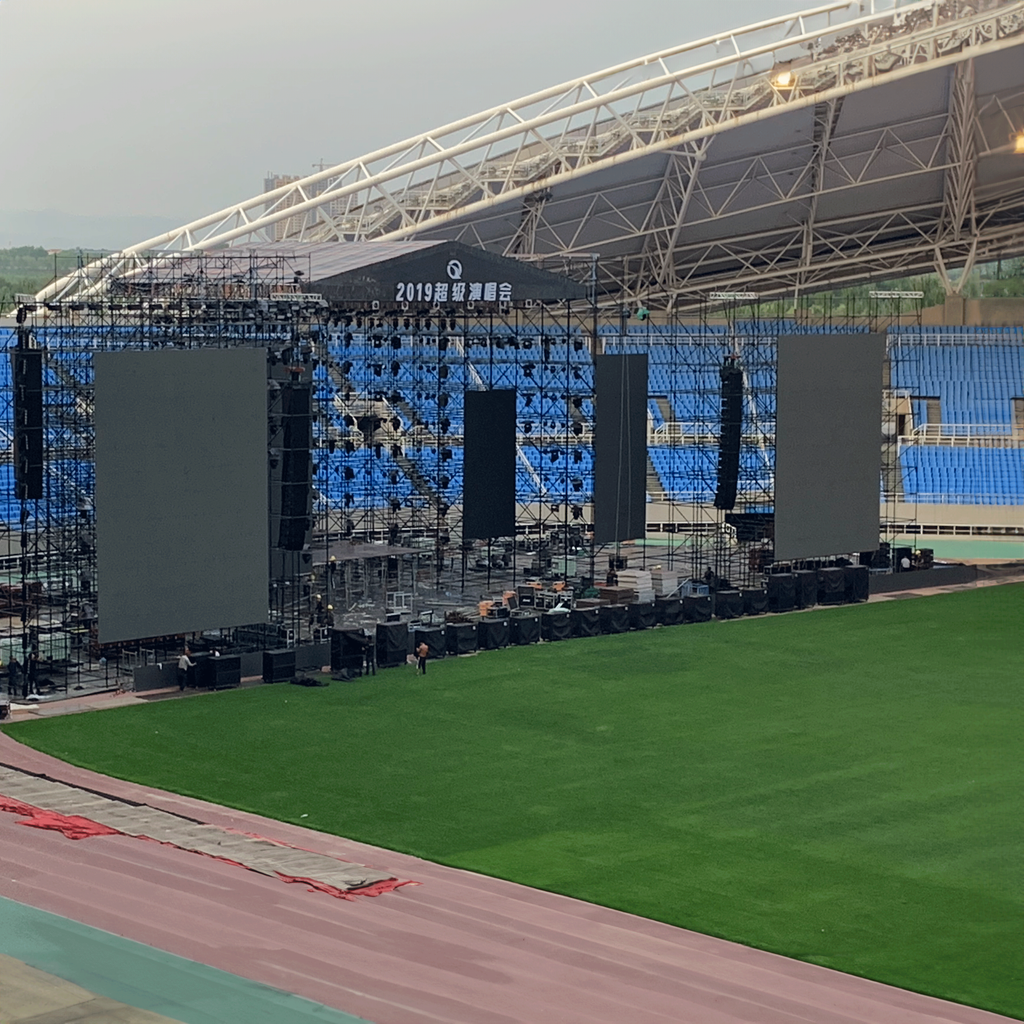
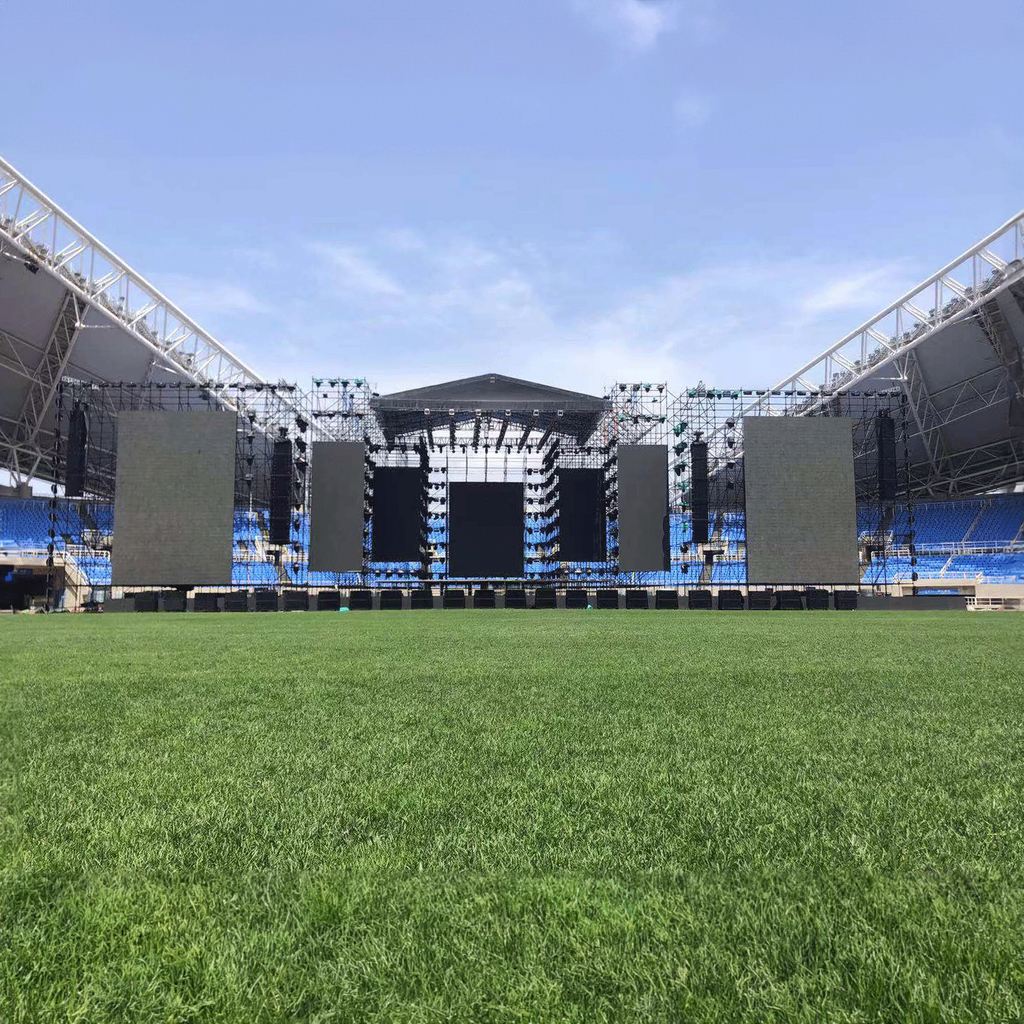
The LED screen model was not specified in the available project material, so this case focuses on the screen application, stage layout, and visual value instead of claiming a specific product model. From the photos, the project included large vertical side screens, a central stage display area, and additional LED visual elements integrated into the stage truss. This created a stronger viewing experience for the audience across the venue.
Project Background
The event was held in a large stadium-style venue with a wide stage, audience seating zones, field area, lighting structures, line array speaker systems, and multiple LED display positions. For this type of project, the LED screen system plays a major role in helping the audience see performers, stage content, sponsor visuals, and live camera feeds.
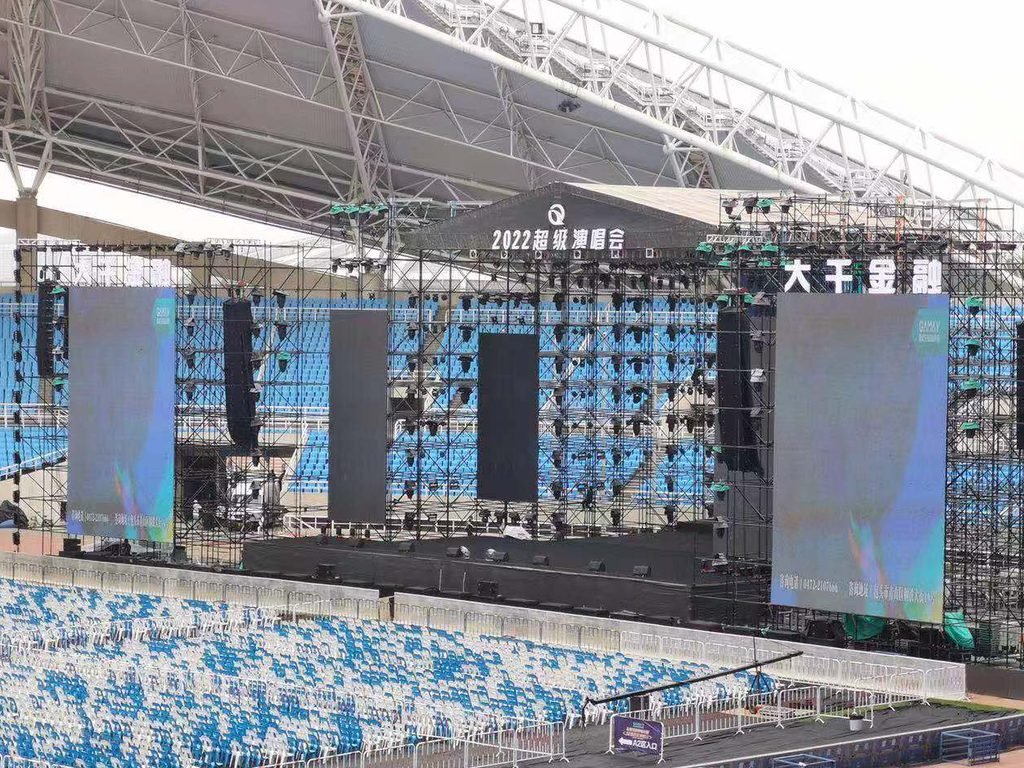
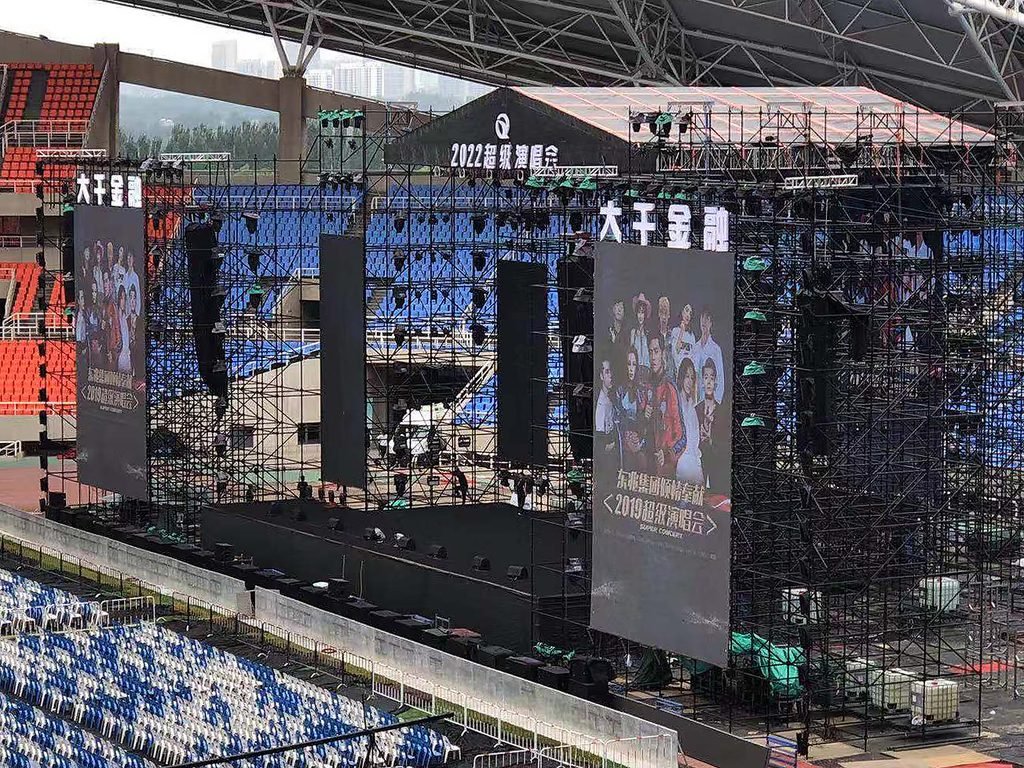
In a small indoor venue, audiences may be close enough to see the performers directly. In a stadium, however, many spectators sit far from the stage. Without LED screens, the performance can feel distant. Large-format LED video walls solve this problem by bringing facial expressions, movement, live images, and event content closer to the audience.
The goal of this stadium LED screen concert setup was to create a visual system that matched the scale of the sound system and stage structure.
Why Stadium LED Screen Concert Setup Matters
A stadium concert is a high-demand visual environment. Screens must remain visible across a large distance, handle outdoor brightness conditions, and support stable playback during long event schedules. Outdoor brightness is especially important because sunlight can reduce image visibility if the screen output is not strong enough.
The LED screen layout in this project included large vertical display areas on both sides of the stage. Side screens are commonly used in stadium concerts because they allow audiences on the left and right sections to follow the show clearly. When combined with a central visual area, they create a balanced stage image.
For event organizers, LED screens are not just decoration. They are part of audience communication. They can display performer close-ups, live broadcast feeds, brand content, countdowns, stage graphics, and background visuals. This improves both the entertainment value and the commercial value of the event.
Visual Layout and Stage Integration
The photos show a large stage built with truss structures, roof support, lighting fixtures, sound arrays, and multiple LED screen positions. In this kind of setup, the LED system must be installed carefully so it does not block speakers, lights, or rigging access.
The side LED screens were placed at prominent positions beside the stage. This helped extend the visual area beyond the center platform and made the whole stage feel larger. For wide venues, this layout is very practical because audiences seated far from the center can still see important visual content.
A professional LED screen system also needs stable signal control and power distribution. In large projects, signal control refers to how video content is transmitted from media servers or processors to the screens. If signal management is unstable, the screen may flicker, show delays, or display incorrect content. That is why planning the control system is just as important as selecting the panels.
Stadium LED Screen Concert Setup and Audience Experience
A well-planned stadium LED screen concert setup helps create a stronger connection between the stage and the audience. Large side screens allow more people to see the performers clearly. Central screens support stage graphics and event branding. Together, these display zones help turn a large venue into a more immersive live experience.
For outdoor concerts, the LED screen must also work with the rest of the production system. Lighting, sound, rigging, and LED display all share the same stage space. In this project, the LED screens were positioned alongside a professional sound system and lighting structures. The full setup created a complete concert production environment.
For integrated stage projects, strong audio support is also essential. A visual system becomes more powerful when it is matched with a clear and stable live sound system, such as large concert sound reinforcement used for outdoor stages and stadium events.
Value for Event Rental Companies
For LED rental companies, stadium concerts are important showcase projects. They prove that a screen system can handle large-scale installation, outdoor performance conditions, and complex stage layouts. A successful stadium project also helps rental companies build confidence with event organizers, production companies, and touring teams.
The stadium LED screen concert setup in this case shows how multiple LED display areas can support a professional live show. Side screens improve visibility. Central screens strengthen the stage image. Large-format visual content helps create a more memorable audience experience.
For rental companies, this type of configuration can be adapted to music festivals, sports opening ceremonies, touring concerts, cultural events, and brand launch shows. The key is to match the screen size, pixel pitch, brightness, cabinet structure, and control system with the actual venue requirements. Pixel pitch means the distance between LED pixels; a smaller pitch is often used for closer viewing, while larger outdoor screens can use a wider pitch depending on audience distance.
Result and Project Value
This project demonstrates how LED video screens can transform a stadium concert stage from a simple performance platform into a large-scale visual experience. The screen arrangement helped the event deliver stronger visibility, better audience connection, and a more complete stage image.
Because the LED model was not confirmed, this case is best presented as a Grandshow Group visual project reference rather than a specific product model case. For Freezoom, it can still be used to show stadium application experience, large event scene understanding, and the role of LED screens in professional concert production.
If your team is planning a stadium event, concert tour, outdoor festival, or large public performance, Freezoom can help recommend a suitable LED display solution based on viewing distance, venue size, installation method, brightness requirement, and rental workflow.